How to Pass Your G Road Test in Ontario — The Full 2026 Guide
The G road test is the final step to earning Ontario's full driving licence — and it's significantly more demanding than the G2 test. Highway driving, high-speed merging, and advanced judgement calls are all on the table. Here's exactly how to prepare and what to expect.
G2 vs. G: What's the Difference?
Once you pass your G2 test, you hold a G2 licence — which lets you drive independently but still carries restrictions (such as a zero blood alcohol limit and passenger limits for new drivers under 19). The full G licence removes these restrictions and represents Ontario's standard adult driving credential.
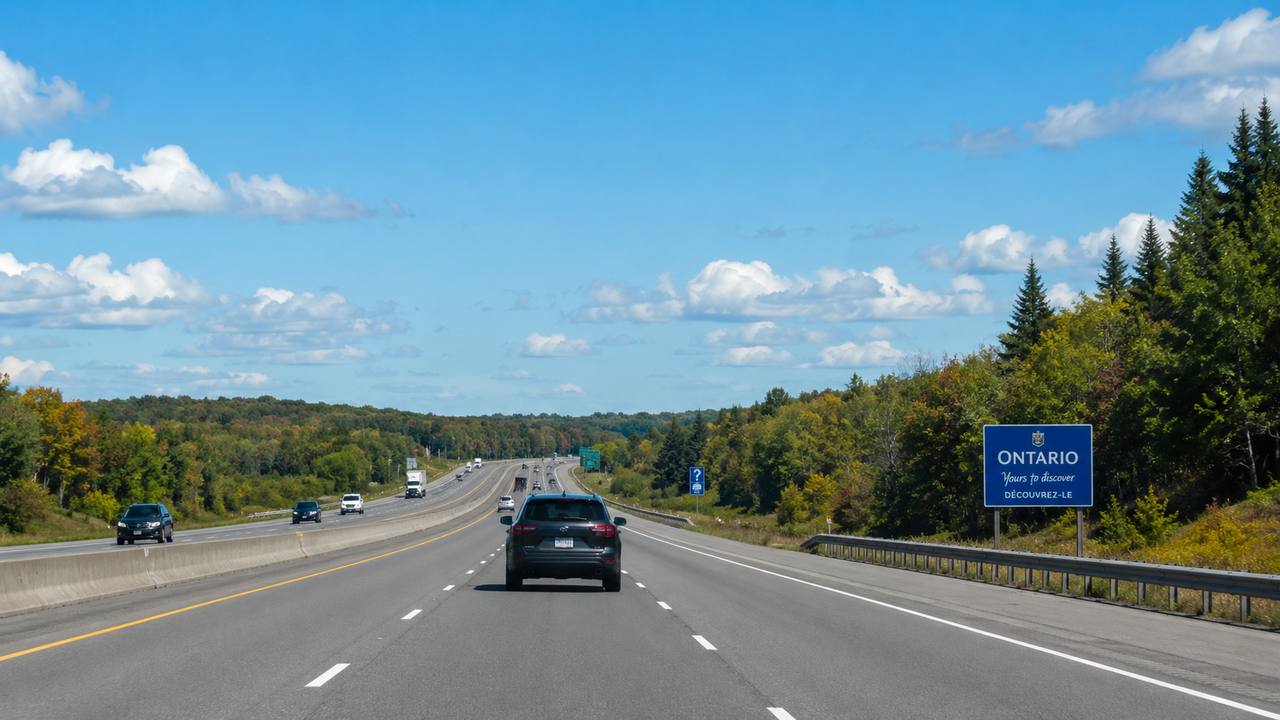
The G test is more advanced than the G2 test in one critical way: it includes mandatory highway driving. You will be evaluated on high-speed merging, maintaining highway speed, lane changes at 100 km/h, and exiting the highway safely. [1]
| Feature | G2 Test | G Test |
|---|---|---|
| Highway driving | Not required | Mandatory |
| Speed environment | City roads (up to 80 km/h) | City + highway (up to 100+ km/h) |
| Duration | ~20–30 minutes | ~30–40 minutes |
| Licence earned | G2 | Full G |
| Eligibility | 8–12 months after G1 | 12 months after G2 [1] |
The Highway Driving Requirement
The highway portion of the G test is what separates it from everything that came before. You will be expected to:
- Merge smoothly onto the highway — matching highway speed before joining traffic, not merging slowly
- Maintain 100 km/h — driving well below the speed limit on a highway is dangerous and flagged by examiners
- Change lanes at highway speed — full mirror check and head check required at 100 km/h
- Keep a safe following distance — at least 3 seconds at highway speed
- Exit the highway correctly — using the deceleration lane properly, not braking on the highway itself
What the G Test Examines Beyond Highway Driving
The G test also covers advanced versions of the same skills tested at G2. Examiners will look for a higher standard of execution:
- Smooth, confident navigation of complex intersections
- Proper right-of-way judgment in ambiguous situations
- Consistent scanning and mirror use — not just when prompted
- Calm, composed driving — showing true control, not nervousness
G Test in Ottawa: The Canotek Centre and Highway 417
The Canotek DriveTest centre in Ottawa is commonly used for G road tests. Its location in an industrial zone near the 417 makes highway access straightforward — and the 417 is the highway you will most likely be tested on.
Highway 417 specifics to practice:
- Acceleration lanes near Canotek can be short — practice merging decisively at speed
- The 417 has heavy truck traffic — maintain safe distance and stay out of the right lane unnecessarily
- Exit ramp deceleration: begin slowing after entering the exit lane, not before
- Watch for posted speed reductions during construction zones — exceeding them is an automatic serious error
G Test in Peterborough: The Lansdowne Centre
The Peterborough DriveTest centre on Lansdowne Street West conducts G tests using local highways and arterials. Students in Peterborough should practice on Highway 115 and nearby stretches of road with higher speed limits to meet the highway experience requirement.
The Peterborough test routes also traverse busy commercial sections of Lansdowne and quieter residential streets — requiring the driver to transition fluently between different speed and traffic environments.
The Most Common G Test Failures
| Mistake | Why It Fails You |
|---|---|
| Merging too slowly onto the highway | Creates a dangerous speed gap — serious error |
| Braking on the highway before the exit lane | Dangerous to following traffic |
| No head check on highway lane changes | Same rule as G2 — blind spot check is mandatory |
| Following too closely at 100 km/h | Under-3-second gap at highway speed is flagged immediately |
| Speeding in construction zones | Automatic serious error, fines doubled in real life too |
| Driving too slowly on the highway | Under-speed on a 100 km/h road is a hazard |
| Rolling stop (still applies) | Automatic fail — same as G2 test |
How to Prepare: A 4-Week G Test Plan
- Weeks 1–2: Log dedicated highway driving sessions — specifically on 400-series roads. Focus on merging, maintaining speed, and lane changes. Aim for 2–3 highway sessions per week to meet the 5-trip requirement.
- Week 3: Book a G-test prep lesson with a certified instructor. Ask them to simulate the test route, including the highway portion. Use their dual-brake vehicle to get comfortable with an unfamiliar car.
- Week 4: Review your weak points from the lesson. Practice any manoeuvres flagged by your instructor. Do one more highway drive 2–3 days before the test. Rest well the night before.
What Happens If You Fail the G Test?
If you do not pass, you must wait a minimum of 10 days before rebooking. [2] More importantly, the examiner will give you a written breakdown of the errors — treat that feedback as a precise training plan. Book a lesson with your instructor, focus on those exact skills, and approach the retest with a specific preparation goal.
Your G2 licence remains valid while you prepare for the retest — you can continue driving normally during the wait period.
Why Book G Test Prep with Safe Drive Ontario?
Passing the G test is about demonstrating high-level, consistent driving — not just knowing the rules. Safe Drive Ontario's G test preparation packages include targeted highway practice, mock road tests in the areas around the Canotek and Peterborough centres, and the option to use our instructor's insured vehicle for the exam itself.
Our instructors have helped hundreds of students earn their full G licence in Ottawa and Peterborough, and our 5-star Google rating reflects the quality of that preparation.
Book Your G Test Prep Lessons
Highway practice included. Canotek & Peterborough routes. Use our vehicle for the test.
View G Test PackagesReferences
- Ministry of Transportation Ontario — Full G Licence Requirements and Road Test Information. https://www.ontario.ca/page/get-g-drivers-licence-new-drivers
- DriveTest Ontario — Rebooking and Waiting Periods After a Failed Test. https://www.drivetest.ca
- Safe Drive Ontario — Driving Packages for G and G2 Tests. https://www.safedriveontario.com/packages.html